
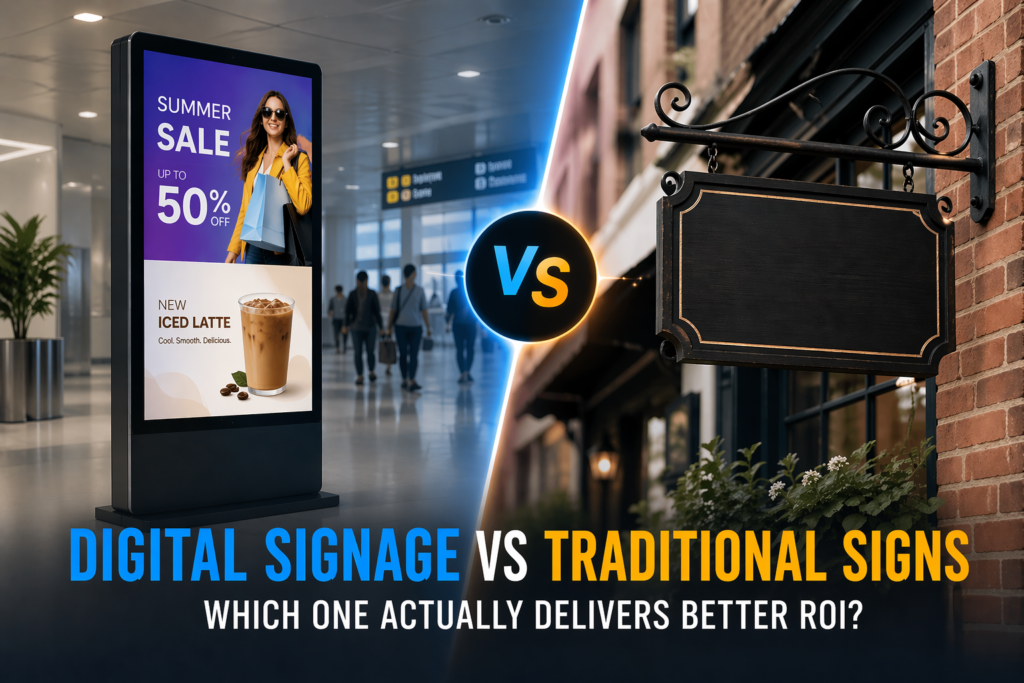
In today’s dynamic business landscape, signage plays a critical role in communicating messages to customers, visitors, and employees. As businesses seek to engage customers more effectively and enhance their brand visibility, the choice between digital signage vs traditional signs has become a pivotal decision. This article explores these two options, with a special focus on return on investment (ROI), examining the growing trends in digital signage, including AI integration, interactive signage, augmented reality (AR), large-scale video walls, and customisation. It also compares these innovations with the conventional approach of static, traditional signage. With businesses across sectors—retail, corporate offices, and general industries—facing this choice, this guide provides valuable insights into making the right decision.
Understanding Digital and Traditional Signage
Traditional Signag
Traditional signage refers to physical, non-digital signs such as billboards, posters, banners, and static displays. These signs have been used for centuries to capture attention and convey information. Common materials include paper, vinyl, wood, and metal. Despite the rise of digital alternatives, traditional signage remains a popular choice due to its relatively low cost and simplicity in design.
Advantages of Traditional Signs:
- Cost-Effective: Initial investment is lower than digital signage, making it accessible for small businesses.
- Simplicity: No need for technical expertise or equipment to maintain.
- Wide Range of Materials: From banners to large billboards, traditional signs come in a variety of forms that can suit different environments.
Challenges:
- Limited Flexibility: Updating content is time-consuming and often requires printing new materials.
- Lack of Interactivity: Traditional signage is static, which means it cannot engage audiences dynamically.
- Environmental Impact: Frequent replacement of traditional signs leads to waste.
Digital Signage
Digital signage uses electronic displays (LCD, LED, etc.) to deliver dynamic content such as videos, images, live data, and more. This technology has transformed how businesses communicate, providing flexibility, interactivity, and real-time content updates.
Advantages of Digital Signs:
- Real-Time Content Updates: Businesses can change content instantly, even remotely.
- Interactive Features: Many digital signs allow customers to interact directly with the content, such as through touchscreens or motion sensors.
- Data-Driven: Businesses can track customer engagement, impressions, and interaction, allowing for performance analytics and better targeting.
- Multimedia Content: Video, animation, and rich content make digital signage more engaging than static signs.
Challenges:
- Initial Investment: Digital signage can require a higher upfront cost due to the screens, hardware, and software.
- Maintenance: Requires ongoing technical support to maintain and repair hardware.
Key Trends Driving Digital Signage in 2026
To evaluate the ROI of digital signage, it’s essential to consider the trends shaping its development and business impact. The following key trends are poised to define digital signage in 2026:
The Rise of Digital Signage in Retail and Public Spaces
In the retail sector, digital signage is increasingly being used to attract customers, promote products, and enhance the in-store experience. Examples include interactive kiosks, digital price tags, promotional videos, and wayfinding displays. Digital signage enables retailers to engage customers with personalised content based on time of day, season, or location, creating a targeted marketing experience.
For instance, a fashion retailer may use dynamic displays to show new arrivals or discounts, while an electronics store may provide detailed product specs through interactive screens. These features not only create a richer customer experience but also drive foot traffic and conversions.
Digital signage is also making waves in public spaces like airports, hospitals, and shopping malls. Wayfinding displays and digital directories help guide visitors to their desired location, improving convenience and reducing stress. Real-time information—such as flight updates or emergency alerts—can also be displayed dynamically.
Sustainability: Digital Displays as Eco-Friendly Solutions
As environmental concerns grow, businesses are increasingly prioritising sustainability in their operations. Traditional signage, particularly in the form of billboards and posters, often ends up in landfills, creating significant waste. The production of these materials also contributes to pollution.
Digital signage, on the other hand, provides a sustainable alternative. While the initial setup can require significant resources, digital displays are long-lasting and can be updated with ease, reducing the need for repeated manufacturing. For example, a hotel chain may use digital signage in its lobbies to display messages, eliminating the need for paper flyers that would otherwise be discarded after each use.
AI Integration: Personalising Customer Engagement
AI has become a core component of digital signage, making it possible to deliver personalised experiences in real-time. AI algorithms can analyse data collected from customers’ behaviours, preferences, and interaction patterns, enabling digital signage to tailor content accordingly.
For instance, in a retail setting, digital signage can adjust its content based on the demographics of passing customers. If a shopper walks by, a digital screen could display a relevant offer or advertisement tailored to their gender, age, or browsing history. This form of hyper-targeted marketing not only increases engagement but also improves the chances of a conversion, directly impacting ROI.
Interactive Signage: Driving Engagement and Interactions
Interactive signage is another key trend reshaping the digital signage landscape. Rather than just passively viewing content, customers can now interact with touchscreens, motion sensors, and voice recognition technologies.
In corporate offices, interactive signage is used for wayfinding, meeting room bookings, and even employee engagement. This enhances the internal experience, improves workflow, and reduces confusion. In retail, interactive signage allows customers to explore products in-depth, view product comparisons, and even check out right from the screen.
These interactions help build brand loyalty and make the customer journey smoother, directly boosting customer satisfaction and ultimately, sales.
Large-Scale Video Walls: Capturing Attention and Enhancing Branding
Large-scale video walls are becoming increasingly popular in high-traffic areas, such as shopping malls, stadiums, and event spaces. These displays can create an eye-catching spectacle, displaying videos, advertisements, and branded content on a massive scale.
By utilising high-resolution LED and LCD screens, businesses can deliver content with stunning clarity and vibrant colours. For example, airports can display real-time flight information on video walls, while corporate offices may use video walls for internal communications and branding.
The impact on ROI comes from increased visibility, customer engagement, and brand recall. Businesses can also use video walls for advertising, generating additional revenue through third-party ads.
Augmented Reality (AR): A Cutting-Edge Innovation in Digital Signage
Augmented Reality (AR) is one of the most exciting developments in the digital signage space. By blending virtual content with the physical environment, AR allows businesses to create immersive experiences that captivate audiences.
Retailers, for instance, can use AR to allow customers to virtually try on clothes or test products before making a purchase. Real estate agencies can employ AR to give potential buyers a virtual tour of properties, enhancing the decision-making process.
For businesses, the ROI of AR signage comes from increased customer interaction, engagement, and satisfaction, which translates to higher sales and brand differentiation.
Customisation: Tailoring Signage for Unique Business Needs
The ability to customise content to suit a business’s unique requirements is one of the strongest advantages of digital signage. Unlike traditional signs, which are limited in scope and content flexibility, digital signage can be tailored to reflect promotions, seasonal offers, or localised content.
A global brand with multiple locations can use digital signage to display different content in each region, customising messages based on local culture, events, or customer preferences. This adaptability enhances customer experience and ensures that businesses are always communicating the most relevant information to their audience.
How Digital Signage Impacts ROI: Key Considerations
Cost Efficiency Over Time
Though digital signage may have a higher upfront cost compared to traditional signs, it can be more cost-effective in the long run. With traditional signage, the materials, installation, and regular updates can add up quickly. In contrast, digital signage eliminates the need for printing new signs and makes content updates instantaneous and remote.
For instance, a restaurant can change its menu items without printing new menus every season. This reduces long-term costs while also improving customer satisfaction by delivering the latest offers directly on digital screens.
Customer Engagement and Conversion Rates
Digital signage enables businesses to display dynamic content, which engages customers more effectively than traditional signs. Studies have shown that digital signage increases customer engagement by as much as 30%, leading to higher conversion rates and sales.
For example, a retail store using video promotions and interactive content has seen an increase in foot traffic, as customers are drawn in by the vibrant visuals and engaging interactions. The ability to update content regularly means that businesses can respond to trends, events, and promotions in real-time, keeping customers interested.
Tracking and Analytics: Measuring Success
One of the most significant advantages of digital signage over traditional signage is the ability to collect data and analytics. Businesses can track how often content is viewed, what types of content get the most engagement, and which locations or displays drive the highest foot traffic.
For example, a chain of gyms could monitor which promotions or fitness tips are getting the most views, allowing them to refine their marketing strategies and improve overall ROI.
Conclusion
The debate between digital signage vs traditional signs is no longer just about comparing initial costs. As digital signage becomes increasingly sophisticated, it offers businesses enhanced flexibility, interactivity, sustainability, and data-driven insights. While traditional signs still have a place in certain industries, digital signage is quickly becoming the future of communication, particularly in retail, corporate offices, and public spaces.
When considering signage ROI, businesses must factor in not just the initial investment, but also the long-term benefits of digital signage: flexibility, customisation, sustainability, and the ability to engage customers in new and innovative ways. Digital signage’s potential to optimise content, track customer engagement, and maximise visibility makes it a powerful tool for businesses looking to improve their ROI.
If you’re ready to transform your business communication strategy and explore the benefits of digital signage, SignWorld Group is here to help. Book a consultation today to discover how we can help you leverage the latest trends and technologies in digital signage to boost.