Retail owners and SMEs do not need more noise in 2026. They need signs that stop people, guide them clearly, and give them a reason to step inside.
That is why business signage in the UK, retail signage ideas, and branded shop signs matter more than ever. Good signage does far more than help customers find your business. It shapes first impressions, supports promotions, improves footfall, and helps people remember your brand.
Across UK high streets, retail parks, and shopping centres, businesses are rethinking how signage supports visibility and customer engagement. The shift is clear. Digital signage continues to expand across Europe, with retailers investing in dynamic displays, stronger visual communication, and flexible messaging systems.
At the same time, sustainable materials, recycled substrates, and lower-waste production methods are becoming more important in signage decisions.
The result is simple: the signs that bring more customers in 2026 combine visibility, relevance, and commercial value.
This guide explores five types of business signs that are expected to perform strongly for UK retailers and SMEs in 2026.
Why Signage Matters More Than Ever for UK Retailers
Customers make decisions quickly. On a busy high street or in a crowded retail park, your sign is often the first interaction customers have with your business.
If it looks outdated, difficult to read, or poorly placed, people move on.
If it looks professional, modern, and clear, it improves your chances of attracting attention and increasing walk-ins.
The role of signage has also expanded. Today it supports several functions:
- Visibility and brand recognition
- Promotions and seasonal campaigns
- Navigation and wayfinding
- Product discovery
- Customer experience
Digital signage is one of the main drivers behind this shift. Market research continues to show strong growth in the digital signage sector, with retailers increasingly adopting dynamic displays to improve engagement and store performance.
At the same time, sustainability is becoming a buying factor. Many businesses now prefer signage materials that are recyclable, lower-impact, or produced using responsible manufacturing methods.
For SMEs, the real question is simple:
Which signage types actually help bring customers through the door?
1. Digital Window Displays That Change With Demand
One of the most effective retail signage ideas for 2026 is the digital window display.
Traditional posters still have their place, but digital screens offer something much more valuable: flexibility.
Retailers can update messaging instantly based on:
- Time of day
- Promotions
- Stock availability
- Weather conditions
- Seasonal campaigns
Instead of printing new posters every week, a digital screen allows you to manage promotions in real time.
For example, a digital window display might:
- Promote morning coffee deals in the morning
- Highlight best-selling products at lunchtime
- Push impulse items during evening footfall
This makes your shopfront feel active and relevant to passing customers.
Digital window displays work particularly well for:
- fashion retailers
- salons and beauty businesses
- cafés and restaurants
- mobile phone retailers
- convenience stores
- multi-location brands
To maximise performance, keep messaging simple. One clear promotion with strong visuals will always perform better than multiple cluttered messages.
2. Sustainable Branded Shop Signs That Build Trust
Sustainability is influencing more purchasing decisions across retail, interiors, and signage.
Many UK businesses are now choosing sustainable branded shop signs made with:
- recycled PET fabrics
- PVC-free films
- FSC-certified materials
- eco-friendly inks
- reusable display graphics
Importantly, sustainability does not mean compromising on design. Modern sustainable signage solutions can still deliver high-quality finishes and strong brand presentation.
For businesses selling premium or eco-conscious products, sustainable signage strengthens brand credibility. Customers increasingly notice how brands present themselves, and environmentally responsible materials help reinforce trust.
Common examples include:
- fascia signs made from durable sustainable materials
- recyclable hanging signs
- reusable promotional display graphics
- lower-impact interior wall graphics
The key is balance. A sign must still be clear, durable, and visible. Sustainability should support strong design rather than replace it.
3. Interactive Signs That Turn Attention Into Action
In 2026, the most effective signs will not only display messages — they will invite customer interaction.
Interactive signage is becoming increasingly popular because it bridges the gap between browsing and action.
Examples include:
- QR-enabled promotional signs
- touchscreen product catalogues
- digital wayfinding screens
- booking or service information displays
- kiosk-style product explorers
For SMEs, the simplest interactive solution is often the most effective.
A QR code on a well-designed sign can send customers directly to:
- an online menu
- a booking page
- a product catalogue
- a promotion or discount page
- a size guide
This removes friction for customers who want information quickly.
Interactive signage also supports the wider growth of AI-enabled digital signage platforms, which allow businesses to manage content more efficiently and measure engagement.
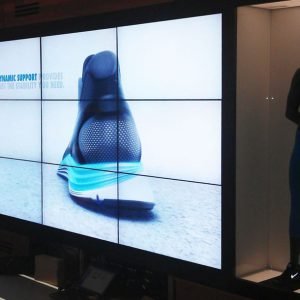
4. Large-Scale Video Walls for High-Impact Locations
Not every business needs a large video wall. However, for the right locations, it can create dramatic visibility and brand impact.
Video walls are becoming more common in:
- shopping centres
- flagship retail locations
- automotive showrooms
- sports and fitness venues
- exhibition spaces
These displays combine scale, motion, and brightness to create a strong visual focal point.
A well-designed video wall can:
- showcase product launches
- support seasonal campaigns
- highlight hero products
- create immersive brand storytelling
The key is content quality. Large screens require bold, simple visuals that are easy to understand at a glance.
When executed correctly, video walls turn signage into an experience rather than just a message.
5. Custom Signs That Combine Physical and Digital Experience
The final sign type growing in popularity is custom signage that connects physical displays with digital experiences.
Customisation is becoming increasingly important because businesses want signage that reflects their brand identity rather than generic templates.
Examples include:
- branded signs with QR-triggered AR experiences
- interactive showroom displays
- mirror-based digital overlays in beauty or fashion stores
- product visualisation tools linked to display graphics
These solutions help businesses connect the physical store environment with the mobile behaviour of modern customers.
People constantly move between physical spaces and their phones. Signs that support this behaviour are more likely to convert attention into enquiries or sales.
How the Right Signage Can Improve Footfall
Well-planned signage improves several important retail performance factors:
Visibility
A strong sign helps customers notice your business quickly in busy environments.
Promotions
Dynamic signage allows businesses to highlight offers and campaigns more effectively.
Navigation
Clear signage helps customers move through a store or location confidently.
Brand recall
Professional signage reinforces brand recognition and trust.
Many successful retail locations combine several elements:
- a strong fascia sign
- clear window messaging
- in-store promotional signage
- digital or interactive displays where appropriate
Together, these create a signage system that supports sales and customer experience.
How To Choose the Right Sign for Your Business
Not every signage trend suits every business.
The right approach starts with your location, customer behaviour, and brand positioning.
For example:
If your business relies on impulse visits, focus on window displays and strong frontage signage.
If you run frequent promotions, digital signage can improve flexibility and reduce printing costs.
If your brand emphasises sustainability or premium positioning, eco-friendly branded signage can support perception and trust.
If your store has a large footprint or complex product range, interactive signage can help customers find information faster.
Working with an experienced signage partner can also make a significant difference. Design, production, installation, compliance, and long-term maintenance all influence how effective your signage becomes.
Conclusion
In 2026, the most effective business signs will do more than display a name. They will help businesses stay visible, communicate promotions, and create better customer experiences.
For many UK retailers and SMEs, the strongest opportunities sit in five key areas:
- digital window displays
- sustainable branded shop signs
- interactive signage
- large-scale video walls for high-impact locations
- customised signage that connects physical and digital experiences
The direction of business signage in the UK is clear. Businesses are moving toward more flexible messaging, stronger branding, improved sustainability, and smarter customer engagement.
When signage is planned strategically, it becomes far more than decoration. It becomes a tool that helps attract customers, reinforce brand identity, and support day-to-day sales performance.
If you want practical advice on the right signage mix for your shop, showroom, or commercial site, Signworld Group can help.
Our team provides end-to-end signage services including design, production, installation, and project management, helping businesses across the UK create signage systems that deliver real commercial impact.
Speak with our team today to discuss the best signage solution for your business.