
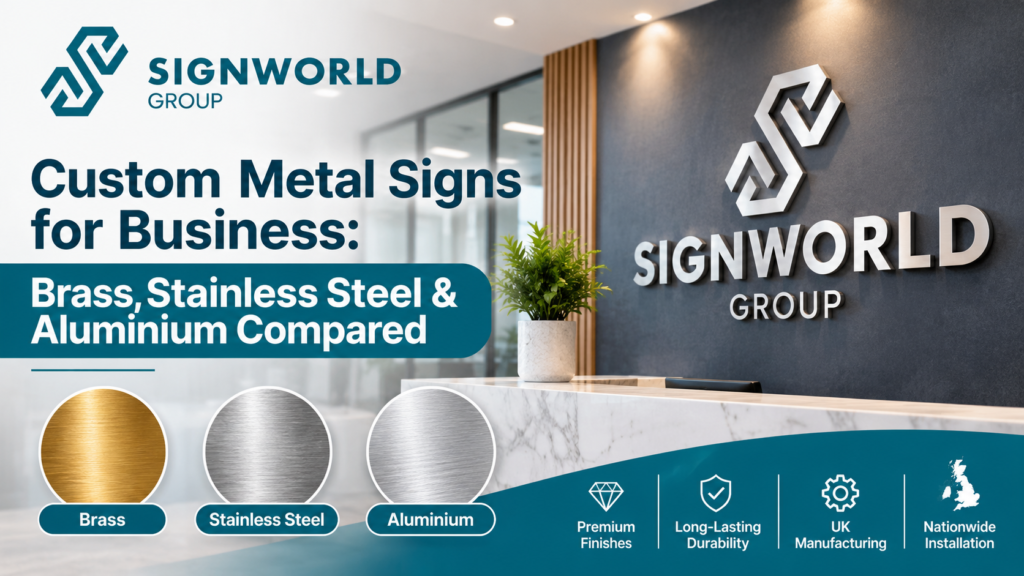
Metal signs that companies in the UK can opt for can vary widely due to the type of metal used, its finish, and how it was constructed. Signs made of brass will provide a classic touch for hotels and high-class receptions, whereas those made out of stainless steel can be used in offices, healthcare premises and even retail spaces.
Why Choose Custom Metal Signs for a Business?
The reason why metal signage is used in many types of commercial establishments is that it allows one to combine strength and good finish in one piece. This means that such a sign can serve several purposes, like being used for single letters, for a logo, entrance signs, reception design, plaque, directories and bigger exterior signs.
In the case of an office entrance, it is necessary that the sign should look professional to the people who stand a couple of meters away from it. The retail fascia performs another function; it must have sufficient size and contrast in order to be readable from far off, even from the other side of the road or parking lot. Hotels and restaurants may place a higher value on finish as the sign is an integral part of the property. Signworld Group produces custom stainless steel, aluminum, brass and many other metal signs at its UK metal fabrication center.
The business has more than 30 years of experience in signage and provides design, UK manufacturing and nationwide installation services. Keeping these stages together helps the design team consider practical issues such as material thickness, fixing points, letter depth and installation before production begins. Businesses planning dimensional lettering can also explore Signworld Group’s 3D letters service, where metal can be used for both flat-cut and deeper built-up letters.
How Do Brass, Stainless Steel and Aluminium Signs Differ?
The three materials are able to make professional business signs but each has its own strengths. The brass material is mostly preferred because of its color and nature. The stainless steel makes the sign have a clean metallic look that is suitable where there is a need for a modern look. The aluminum material is lighter and allows a lot of flexibility when the business needs their signs to be painted to a certain color.
Brass Signs for Business
Typical applications for brass signs selected by business owners include locations where the sign must have an established look or traditional appearance. The warm coloring of brass is particularly complementary with dark wood, stone, marble and traditional decor. Therefore, it is an appropriate choice for hotel signs, restaurant signs, private clinics, lawyers offices, high-quality offices and old-fashioned property designs. Depending on the design, brass signs may take the form of lettering, engraving or fabrication. They can be coated in a variety of different ways, which alters the level of reflection that the material has. A polished coating causes a higher degree of reflection and visibility of lettering.
Signworld Group lists brass and bronze among its metal signage materials and describes them as suitable where brands want a warmer, more traditional metal finish. The surrounding interior should still guide the decision. Brass lettering can look impressive against a dark wall, but the same letters may have less contrast against a warm cream or gold-coloured background. Lighting also changes its appearance throughout the day.
For this reason, brass signs business projects should consider the wall finish, lighting and other materials in the space before the final metal finish is approved.
When Are Stainless Steel Signs the Better Choice?
Stainless steel is a material which is very useful in creating signs suitable for contemporary commercial areas since it can give you a neat finish without the need to paint the surface. A brushed stainless steel sign contains a directional finish which reduces the reflection of light. Such a sign will be great for corporate office spaces, health facilities, financial institutions, hotels, and upscale retailers. A mirror polished stainless steel gives a much brighter and more reflective finish. The polished stainless steel sign can make a dramatic impression in an upscale interior setting, but companies must consider the image being reflected. The surrounding activity, lighting, and motion may alter the impression created by the sign. Signworld Group manufactures brushed stainless steel signs as well as polished stainless steel signs.
The installation environment matters here. An internal reception sign has different demands from external lettering on an exposed building. Material grade, fixings and finishing should therefore be selected as part of the complete sign specification rather than treated as separate choices.
Stainless steel is also commonly used for dimensional lettering. Individual letters can be cut from sheet material for a thinner profile or fabricated into built-up letters where greater depth is required. That makes stainless steel signs suitable for both restrained internal branding and larger external identity signs.
Why Is Aluminium Popular for Commercial Metal Signage?
Aluminum is an ideal choice in terms of providing strength and weight while also offering design versatility. This metal is substantially lighter in weight compared to many other metals that could be utilized for creating signs and, therefore, could be especially helpful in case you are creating large size letters or signs and would like to mount them to the fascia. Lighter weight makes some fixing options easier, although the overall installation system and the construction should still fit the building.
The key benefit offered by aluminum is the finish. There is no need to maintain the natural metallic look of this metal. Aluminum can be powder coated or painted in any number of colors. Powder-coated aluminum signs in RAL and Pantone color schemes are offered by Signworld Group. This makes aluminum a good choice for shopfront letters, restaurant signs, retail parks, leisure businesses, etc.
It also works well for built-up lettering. The returns can create substantial depth without making each letter unnecessarily heavy. Acrylic faces can then be added where illumination forms part of the design. For businesses planning a wider external signage scheme, the metal signs guide provides more detail on the role of metal in long-term outdoor signs.
Which Metal Finish Should You Choose?
Material and finish are separate decisions. Two stainless steel signs can look completely different if one has a brushed surface and the other has a mirror-polished finish. The same applies to aluminium. A natural-looking metal finish may suit an industrial environment, while powder-coated aluminium can follow the colours of a retail or hospitality brand.
Brushed Finishes
Brushed metal has fine directional lines across the surface. It produces less reflection than a polished finish and often works well in offices, receptions and commercial interiors. The controlled appearance makes it useful where the sign needs to look professional without becoming the most visually dominant feature in the room.
Polished Finishes
Polished metal reflects considerably more light and can create a stronger visual feature. This treatment works well in premium retail, hotel entrances and high-end interiors, although fingerprints and surface marks can become more noticeable where people can easily touch the sign.
Powder-Coated Aluminium
Powder coating is particularly useful when the business wants metal letters without a metallic colour. Black, white and darker neutral colours are common, but the finish can also follow a stronger brand palette. Signworld Group offers powder-coated aluminium in RAL and Pantone colour options.
Etched and Engraved Metal
Metal does not always need to form large dimensional letters. Etching and engraving can add detailed text, logos or information to plaques and panels. Signworld Group uses photo-chemical etching and CNC engraving where fine detail is required. This approach can suit building plaques, directories, room identification, commemorative signs and branded reception panels.
Where Do Custom Metal Signs UK Businesses Use Most Often?
The setting often makes the material choice much easier. For a professional office reception, brushed stainless steel letters can provide a clean focal point without overpowering the room. A financial or legal business may prefer brass where the interior already uses warm timber and traditional materials.
Signage behind a reception desk is viewed from close range, so finishing and alignment matter. Rough edges, uneven spacing or visible fixings are much easier to notice indoors. Signworld Group’s guide to signage for retail, offices and commercial spaces notes that reception signage plays an important role in giving visitors a clear brand reference when they enter a workplace.
Retail signage often needs to work at a greater distance. Powder-coated aluminium built-up letters can give a shopfront strong depth while allowing accurate use of brand colours. Stainless steel can suit premium retailers where the natural metal finish forms part of the brand style. Hotels and restaurants may use brass or polished stainless steel near an entrance, while larger aluminium letters can work on an external fascia.
For industrial buildings and warehouses, the main priorities can shift towards scale, clear identification and practical installation. Aluminium is useful here because large letters can be produced without the same weight as some alternative metals.
How Do Metal Signs Affect a Business’s Appearance?
It is not only the means by which a name is displayed; the business sign becomes part of the décor. If there is a retail space that has a well-designed interior but a poor external sign, the space will seem unfinished from the outside. Similarly, an office that has no images on its empty walls will leave an impression that the visitors cannot be oriented about the brand right from the start. A metal sign will address this issue without creating extra clutter in the process. The shadows created by depth allow individual letters to pop out of the mounting surface.
The sign should still suit the business. A highly polished brass sign may be appropriate for a luxury hotel but excessive for a warehouse entrance. Large industrial aluminium lettering may work well across a broad fascia but feel out of place behind a small reception desk.
Good custom metal signs UK projects start with the building, viewing distance and brand requirements rather than selecting a material simply because it looks attractive in isolation.
What Should Businesses Consider Before Ordering Metal Signs?
The internal sign will not have the same elements of weather, wind and temperatures that would affect the external signs. Another factor to take into consideration is the mounting surface since brick, cladding, stone, glass and interior partitions each call for their own methods of installation. Third, the viewing distance has to be taken into account. Letters that have a thin finish with fine details may be great for the reception wall but they may be hard to read when viewed from across the street. Lighting is another crucial element to take into account. While natural light looks good on metal, there is a possibility of glare if the lighting is intense.
Maintenance should be considered before the sign is manufactured. A sign mounted at ground level will be easier to clean than lettering several storeys above the pavement. Finishes used in areas where customers regularly touch the sign may also show marks more quickly.
Signworld Group’s custom metal signage process includes a site survey, design and finish specification, fabrication and installation. The company uses concealed fixings and other mounting methods according to the project. These practical checks can prevent a business from choosing a sign that looks good in artwork but does not work well once installed.
Why Choose Signworld Group for Custom Metal Signs?
Signworld Group has more than 30 years’ worth of sign making experience and produces their signs in the UK. The services offered by this company include designing, producing and installing the signs throughout the country. The company uses such metal fabrication processes as laser cutting, water-jet cutting and computer numerical control machining. Signworld Group uses the following materials when producing metal signs: stainless steel, aluminium, brass, bronze and Corten steel, as well as such finishes as polished, brushed, powder-coated, etched and engraved. Thus, the customer can pick the material depending on the actual location.
A hotel may need polished brass entrance letters. A corporate headquarters may suit brushed stainless steel signs, while a multi-site retailer may prefer powder-coated aluminium because it can follow specific brand colours across different locations. The same project may even use more than one material where the external and internal signage have different requirements.
Conclusion
Metal that works best for all business establishments is not available. When looking for metals to use for businesses, select brass for your business if a classical look is what you need. Brass can be used very well in places such as hotels, restaurants and professional offices where wood, stone and dark materials are already part of the interior design. If you require a metallic look that is very modern, select stainless steel. There is brushed steel that is ideal for offices and commercial establishments, and there is polished steel that will make a great feature for flagship stores.
The final choice should consider the installation surface, sign size, viewing distance, exposure, lighting and expected maintenance as well as appearance. If your business is planning new custom metal signs UK, Signworld Group can help with design, material selection, manufacturing and installation. Explore the 3D letters service for dimensional metal lettering or contact Signworld Group to discuss your signage requirements and request a quote.
Frequently Asked Questions
What metal is best for custom business signs?
The best option depends on the setting. Brass suits warm and traditional interiors, stainless steel works well for modern commercial signage, and aluminium is useful for larger or colour-matched signs where lower weight is an advantage.
Are stainless steel signs suitable for outdoor use?
Yes, stainless steel can be suitable for external signage when the correct grade, construction, finish and fixings are specified for the site. Exposure and location should be considered before production.
Are brass signs business premises suitable for reception areas?
Yes. Brass can work particularly well in hotel, restaurant and professional reception areas where a warmer metal finish suits the surrounding interior. Brushed and polished surfaces can create different visual effects.
Can aluminium signs match company brand colours?
Yes. Aluminium can be painted or powder coated, and Signworld Group offers RAL and Pantone colour options for its powder-coated metal signage.